
Product definition with AI in the workflow
I used the design of a pricing-rules module for wholesalers as a real case to show something I care about: integrating AI into every phase of definition as one more collaborator —naturally, not as a one-off tool— without the decisions ever ceasing to be product decisions.
My role
I led the module end-to-end: functional definition, user sessions, prototyping and the 21 user stories in Notion. But what I want to show here isn't the module itself — it's how I work with AI: I brought it into every phase as one more collaborator, to iterate at a speed I couldn't have reached alone.
The product was a module of automatic pricing rules for wholesalers — a domain with plenty of business logic behind it. Exactly the kind of problem where I wanted to see how far I could push working with AI without losing product judgment.
The method
How I worked with AI in every phase
AI wasn't a tool I opened at the end to draft something. It was integrated as one more collaborator across the four phases of the process: I led and decided, it sped up the execution. Here's what each phase contributed.
AI didn't make the decisions. They came from research, user feedback and product judgment. AI made it possible to implement them much faster.
In practice
A model change absorbed without losing momentum
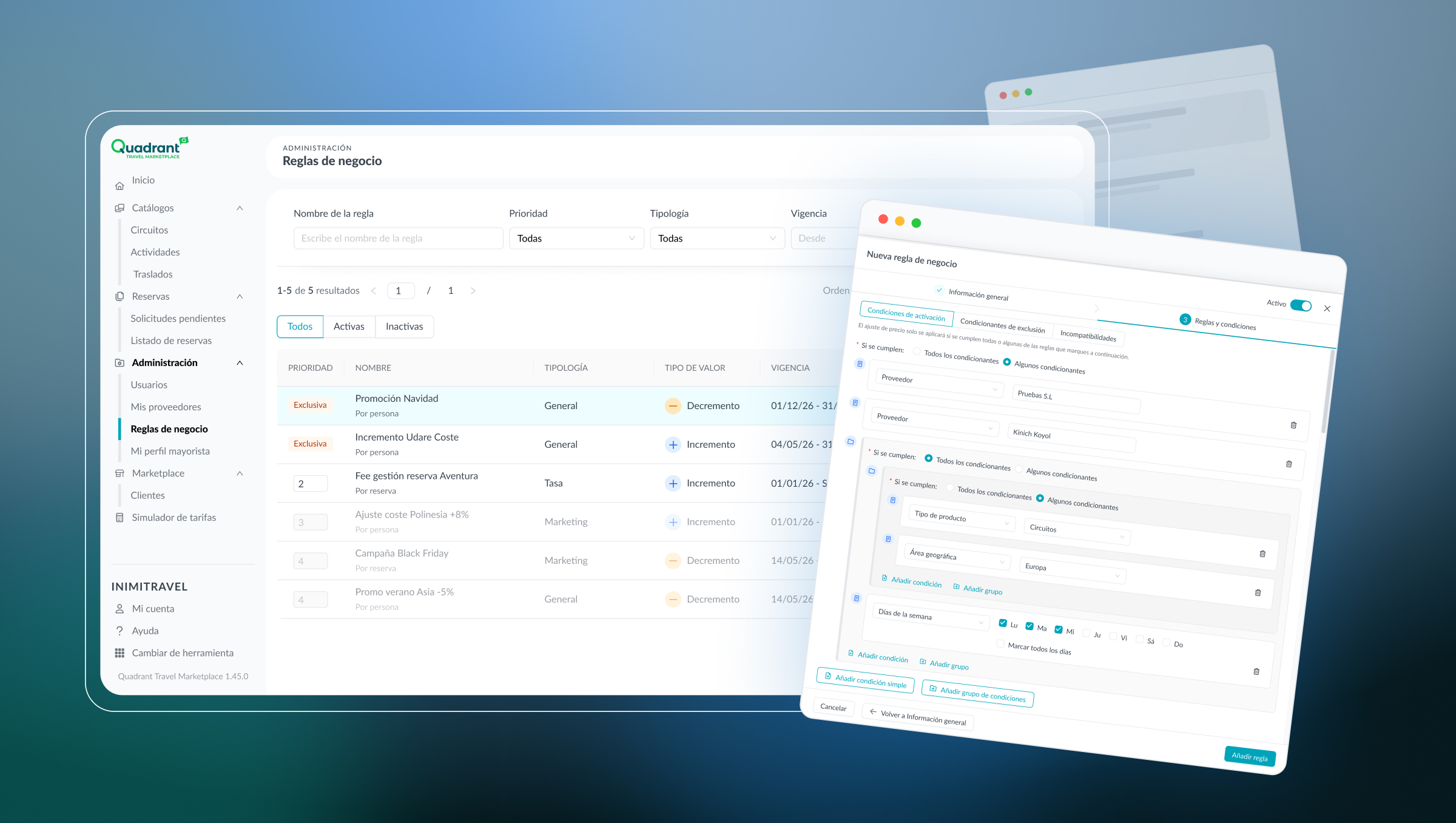
The best example of why this method works: after a user session, the data model changed at its root. With AI I rewrote the prototype —five versions, replicating QTM's real design system— and updated the 21 user stories on the spot. A change that would once have meant days of re-specification was absorbed in an afternoon, without losing traceability.
The prototype
One of the prototype versions iterated with AI, replicating QTM's real design system.

Living documentation
The step-by-step creation — one of the screens AI helped re-spec on the fly after feedback.

Results
What this project demonstrates
Definition, prototype and documentation advanced in parallel, not in a waterfall.
21 user stories updated in real time after each feedback round.
The decisions stayed product decisions; AI sped things up, it didn't decide.
A module defined and specified end-to-end, ready for development.
Reflection
What I'd do differently
I'd keep an explicit record, from day one, of what the person contributed and what AI did in each decision. The process was very fast, but that "who decided what" traceability is exactly what makes AI-assisted work defensible — and I documented it too late.